Lakshya NDA logoLakshya NDA

Solar System, Meteors, Comets and Eclipses

Cover astronomy basics needed for General Science objective questions.

Level

Core

Study Time

16 min

Exam Relevance

Medium

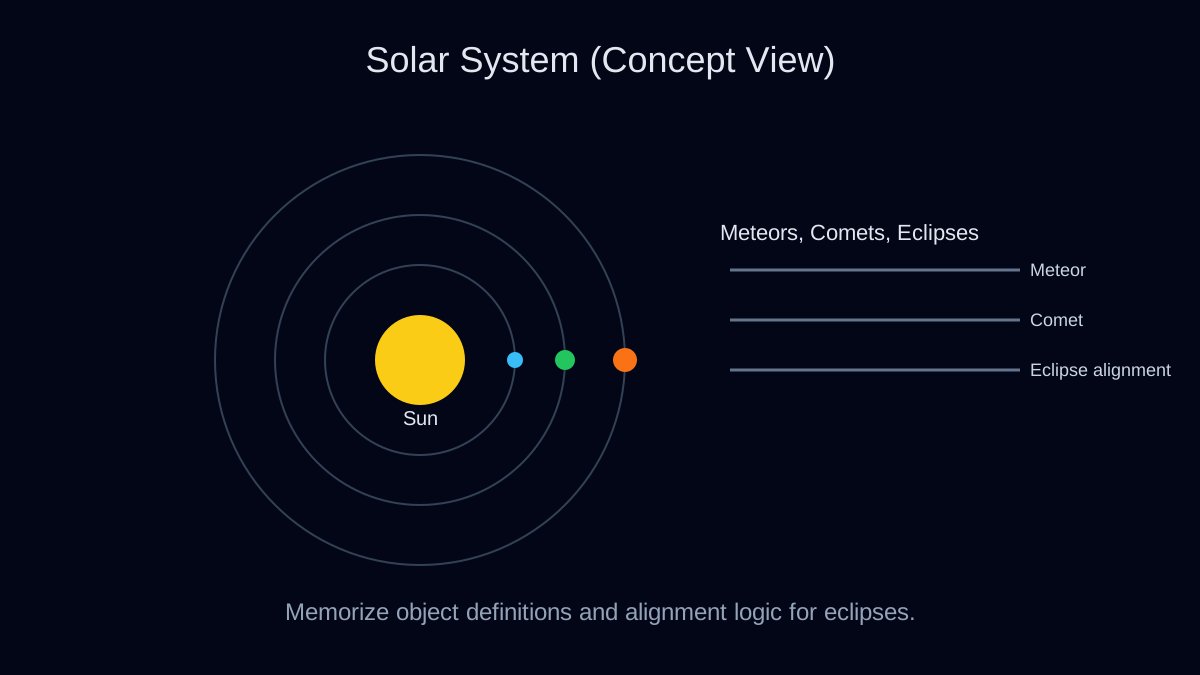
Solar System, Meteors, Comets and Eclipses visual

Core concepts

  • Planets and solar system structure basics.
  • Difference: meteor, meteoroid, meteorite, comet.
  • Solar and lunar eclipse fundamentals.

Fast memory tip

  • Learn one-line definitions and one key distinguishing feature for each space object.

Common mistakes

  • Confusing meteor with comet.
  • Misunderstanding eclipse alignment.

Chapter-end mini quiz

4 quick questions from the question bank.

Question 1

Which one of the following is the correct sequence of arrangement of the given planets in descending order of their density (in gm/cm$^3$)?

Question 2

Consider the following statements in case of terrestrial planets: I. Mercury, Venus, Earth and Mars are terrestrial planets having low densities as compared to other planets. II. They lie between the Sun and the belt of asteroids. III. Their lower gravity can hold the escaping gases. Which of the statements given above is/are correct?

Question 3

Which one from among the following planets is largest in size?

Question 4

Which one of the following planets has the highest density?

Source Base

  • NCERT space science basics
  • CBSE eclipse and solar system revision notes